
By admin
Eiffel Tower: A Study in Engineering, Scale and Timeless Design
Eiffel Tower: A Study in Engineering, Scale and Timeless Design
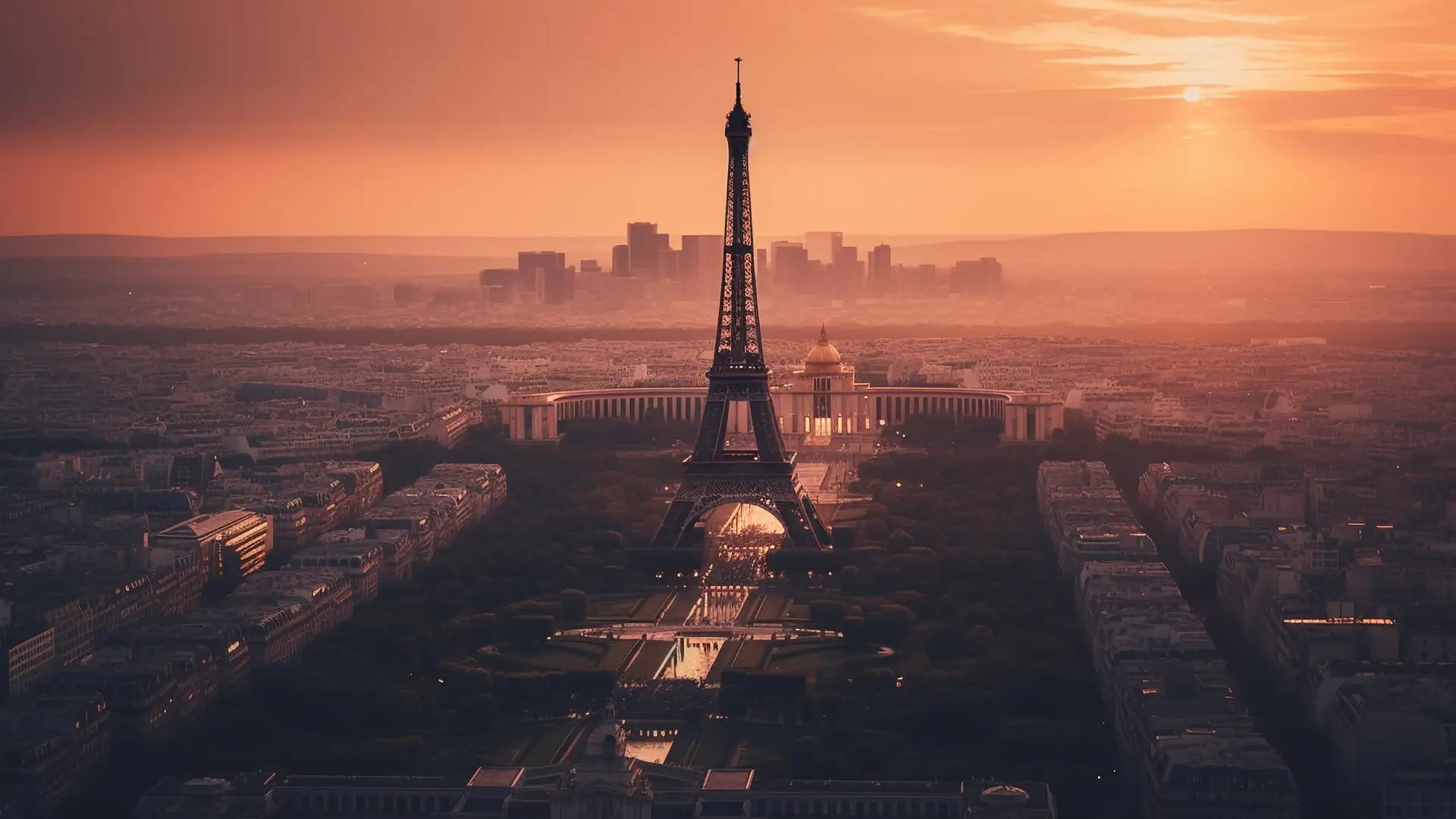
The Eiffel Tower is one of the world’s most recognised architectural landmarks and a defining symbol of Paris. Built for the 1889 Exposition Universelle, it was conceived as a bold demonstration of engineering progress and industrial capability.
Designed by Gustave Eiffel’s engineering company, the tower was developed between 1887 and 1889 and completed in just 2 years, 2 months and 5 days — a remarkable construction timeline for a structure of its scale and complexity.
Key Facts & Numbers
- The Eiffel Tower currently stands at 330 metres / 1,083 feet including antennas. Its original height, without antennas, was approximately 300 metres / 1,024 feet. The structure has a ground width of 125 metres / 410 feet, with each pillar measuring around 25 metres / 82 feet wide at the base.
- The tower’s metal frame weighs approximately 7,300 tonnes, while the total structure weighs around 10,100 tonnes. It was assembled using 18,038 iron parts and nearly 5 million rivets, reflecting an extraordinary level of prefabrication and precision for the late 19th century.
Development & Construction
- Construction began in January 1887 and was completed on 31 March 1889. The tower was originally intended as a temporary structure for the World’s Fair but soon became a permanent part of Paris because of its scientific, broadcasting and symbolic value.
- At the time of completion, it was the tallest man-made structure in the world, a title it held until the Chrysler Building in New York surpassed it in 1930.
Levels & Visitor Experience
The tower has three main public levels:
- First Floor: Located at about 57 metres / 187 feet, with exhibition spaces, glass-floor viewing areas, shops and dining options.
- Second Floor: Located at about 115 metres / 377 feet, known for panoramic city views and premium dining.
- Top Floor: Located at about 276 metres / 906 feet, offering one of the highest public observation experiences in Europe.
Special Amenities
The Eiffel Tower is not just an observation structure; it also houses restaurants, bars and visitor facilities. Key amenities include Madame Brasserie, Le Jules Verne, casual buffets, shops and a Champagne Bar at the top. Le Jules Verne, located around 125 metres above ground, is a Michelin-starred dining destination offering views across Paris.
Elevator Design
The tower’s elevators were among its most advanced engineering features. In June 1889, five hydraulic elevators went into operation. The curved legs of the structure made vertical transportation highly complex, requiring specialised lift systems that could travel along inclined paths.
Today, the tower has 5 elevators from the esplanade to the second floor and 2 double-cabin lifts from the second floor to the summit, enabling large-scale visitor movement through a structure originally built in the 19th century.
